10 September 2014

In praise of weeds

I wasn't about to let an all-day torrential downpour keep me couped up. Since it was at least warm, I decided to go for a run down to the river. I was soaked within 30 seconds or so. But I didn't get any wetter after that.

Unfortunately, I didn't bring my camera, but I saw a lot of erosion. It was especially acute in a floodplain area hit by a T0 tornado about 6-8 weeks prior. Instead of leaving all the debris, it appears the municipal land managers took a lot (not all) of it away, keeping with the "slick and clean" agricultural ethic of the Hoosier state. Several large patches were scraped bare, and now gullies were beginning to form. My mind turned toward erosion.

I'm aware that many folks lump almost all of my beloved native plants - perrenial, biennial, annual, grass, sedge, forb, and shrub - as "weeds". But ecological restorationists also have their weeds. We often find themselves trying to take disturbed sites and attempting to move them along to a more "mature" ecological community. We measure this by giving each plant a number from 0 - 10 (varying by state), it's "coefficient of conservatism" (C-value). Without elaborating to much, "The
conservatism concept is based upon the recognition that individual plant species display
varying degrees of tolerance to disturbance and likewise varying degrees of fidelity to
specific natural habitats
" (Rothrock, 2004). Thus, we generally* like sites that have a high mean-C (average C-value of all the plants), one with lots of plants that are normally associated with high-quality, undisturbed natural areas. Low mean-C sites are considered disturbed and a little "weedy". Here, opportunistic species have moved in and won't let more conservative species in. Since this is a simple, quantitative measure, sometimes low-C sites are quickly judged as not good enough.**

Polygonum pensylvanicum (pinkweed/smartweed). A weed, by all accounts. C-value = 0.


But "weeds" serve a very important role: reducing soil erosion. More conservative (and usually perennial) plants might not be developed by the time the next big storm roles in. So the weeds move in and hold the soil in the meanwhile. Given enough time without disturbance, plant communities will (usually) shift to a more conservative plant community.

Soil is foundational to the biotic community. No soil, no plants (that includes food plants). It's genesis takes decades, centuries... millennia. Much can be lost in a single weekend, to say nothing of decades of poor management.***
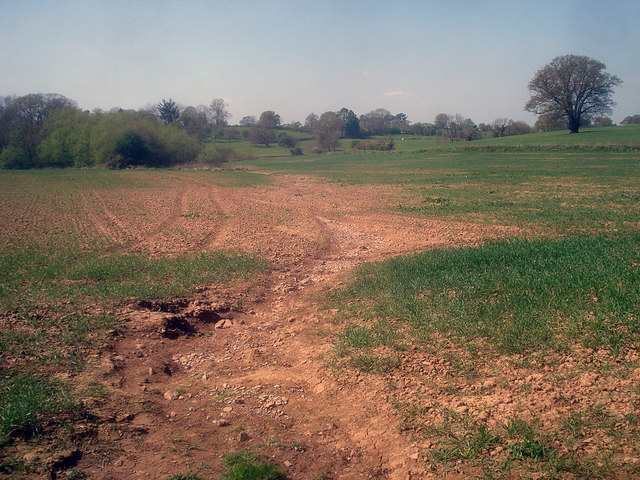
Whoops, there goes a century.

We shouldn't be surprised that we live in a world of weeds. Never before has the earth seen so much bare dirt. And lawn mowers. I'll admit it's a little depressing to see so many restoration sites dominated by the same crappy plants I see in every ditch and parking lot. But, native or no, the weeds may be better short-term alternative to protect long-term ecological and human assets.


Mimulus ringens (Monkey flower). C-value = 4, meaning that it is found about equally in disturbed and high-quality sites. This was at a wetland restoration where it was probably planted.
  
Carex aurea (Golden sedge). C-value = 9 in Indiana, though I found this in Wisconsin. Don't expect to find this in a ditch. It is quite short, and I held this one aloft to, um, enhance its grandeur.
*This is something of an oversimplification for blog's sake

**Plants that are both non-native to a region and invasive by habit are a related, but sometimes distinct, problem. The most problematic ones are perennial. They are customarily assigned a C-value of zero.

***Of course, erosion is a natural process, even in a floodplain. If a flood is "gradual" and high enough, more sediment can be deposited and the process can begin again. Better cultural practices have reduced erosion in recent times, but it is still a problem in many/most areas.

20 August 2014

back to the blogosphere

Well, it's been 6 months. Was not sure what to do with this blog, but I think I will use it now to post some frequent, unpolished accounts of new plants that I'm learning (work-related), or assorted ecological insights, curiosities, and bits of joy. The reality is that I simply don't have the time anymore to sit here all night and polish off a nice post. Quick and dirty is the name of the game, and even the brief typing out and sharing should help me memorize some new plants.

I would post a personal update of things that have happened... but I'm assuming that you, dear reader, already know most of that. If you don't, give me a buzz.

Onward.

26 February 2014

INature: Spring is on it's way

I included this little extra note in an announcement to one of my classes, and thought I would post it here:
On a geographically/ecologically related note: We have talked a lot about hours of daylight, angle of the sun, etc. Lots of plant and animal behavior (like migration) is driven not by temperature, but by photoperiod (day length). We have been hearing/spotting several spring birds around campus: Sandhill Cranes, Red-Winged Blackbirds, and Killdeer. These three have pretty distinctive calls, which you can learn at the Cornell Lab of Ornithology website. Cranes will migrate from the Gulf of Mexico thousands of miles up to the Arctic tundra, where they will nest. Pretty soon, the Spring Peepers (frogs) will be calling from the Arboretum property behind Randall. Skunk cabbagae is most likely already in bloom along the damp depressional areas. It can generate it's own heat and the flower will even melt its way up through the snow. Hopefully geography will give you some of the tools for understanding the many incredible phenomena of Creation all around you. Spring is on its way (days are getting longer). Be still, observe, and enjoy!

Here's a video about skunk cabbage.

Fall crane watching in NW Indiana. Too windy, and not very fruitful. But thousands present.

Tip out or tip pit from a fallen tree at Jasper-Pulaski wildlife area (NW Indiana). The depression will likely be visible for decades, and may provide a basin of water for reproducing herpitiles.

22 January 2014

INature: 700 words to convince a skeptic... why conserve prairies?


I had occasion to write a ≤ 700 word essay to "Explain the importance of prairie conservation to an audience that is not particularly interested in nature." Here goes (with a picture for good measure)...
Compass plant (Silphium laciniatum). Like other asters, each "flower" is itself an assemblage of many sterile or fertile flowers. Photo by Karen Thada.

It is no surprise that prairies are so rare today, having declined some 90-99% across their original range. Prairies are incredibly productive. They have been producing massive amounts of forage for many thousands of years, their shoots and roots leaving the soil an annual deposit of fertility. This soil is fundamental to making our own livelihood as a species, so it’s a difficult but important question to ask why prairies should play a role alongside and within our human system.

There are many details of our own human history that we preserve – stories of migration, discovery, and social change. But our human history is tied up in specific places, resources, and even organisms. Prairies are a living library. Their genetic code holds records of past weather patterns, of plows and grazers and fires. By maintaining and restoring prairies, we keep a link with our past and provide a story for our children to live into.

We directly profit from several measureable services that prairies provide. When a prairie absorbs and retains floodwater, it has saved communities downstream from flood damage. Natural vegetation holds back soil and filters contaminants, reducing the need for expensive water treatment, as well as retaining fertility to grow crops. Prairie conservation doesn’t have to be all or nothing, either. Prairies evolved to withstand pressure from grazers, and there are many cattle owners who are making a living off of biodiverse prairies. Researchers have found that farmers who installed a few well-placed strips of native vegetation in plowed fields achieved a disproportionately high level of “ecosystem services” like flood and erosion control.

Prairies can also be considered as an insurance policy for a risky future. There are hundreds of species of prairie plants containing thousands of genes. These genes do it all - producing complex chemicals and hormones, forming associations with fungi in the soil, or helping the plant tolerate drought. We are dependent on plants for 100% of our food (animals eat plants, after all!) and understanding the genes in prairie plants (or even using them) can help us develop higher-yielding food crops. The more species we can save, the better our insurance policy. The same goes for replacing fossil fuels with prairie-harvested biomass, developing new medicines, or perhaps even developing a new food source. We have so little prairie left, it would be foolish to let this precious resource disappear forever.

Although at first glance we might not find prairies entrancing, it helps to stoop low and take a closer look. Much of the beauty and drama we see in other landscapes – like crushing avalanches or towering trees – are also happening in the prairie on a reduced scale. Hundreds of plants and thousands of insects are all busily growing, migrating, and competing. We have only studied a few of the species to any great extent. In a prairie, you can find a monarch butterfly on a transcontinental migration to ancestral grounds known only to its grandparents. A tiny yellow spider blends in with a yellow flower, waiting for a bee to ambush. But even some of the large-scale drama is still around. Nothing gets the blood running like a roaring wildfire, or a one-ton bison bull charging at a rival.

Prairie conservation in the U.S. is not really about preserving nature untouched and apart from human society. Prairies evolved with an active human presence and we are present in even greater numbers today. But considering the many ways we directly benefit from prairie ecosystems, not to mention the diverse and theatrical plays they put on every year, maintaining these biodiverse treasures is a responsibility we can proudly embrace.

INature: first snow

A small prairie restoration demo.


We received our first decent snowfall last night, about six inches. The wind was minimal and it was warm (mid-upper 20's) so I thought a nice walk through the Taylor Arboretum was in order. With proper boots and clothes, a winter walk through the woods is almost always very pleasant. As a member of an indoor species, I am used to throwing on minimal cover and dashing between heated spaces, giving myself to the illusion that my environment is a harsh, inhospitable space for four months of the year. As they say, there is no bad weather, just bad clothing. I'm out of excuses.


The remains of a dogwood inflorescence. The berries are a bird favorite and don't last long.


I walked quietly a ways into the woods. Wiping the snow off of a stout tree trunk, I sat still for awhile, letting the silence sink in as only a winter woods can do. I heard the interstate traffic, two miles to the west but steady as a stream. The campus chimes rang every quarter hour. I watched the snow fall and cashed in my lottery ticket of time, for a rare chance to have a coyote, turkey, deer, fox, quail, or bobcat just stroll by within my field of vision. Much more reliable are the squirrels and birds of course, but you never know. I was recently out to do some routine water monitoring at an unremarkable urban stream and was greeted by the inquisitive gaze of river otter. The strongest predictor of wildlife sightings is time spent out of doors.


After about five minutes, I heard a congregation of very high, whispy calls. Some delicate, nimble winters birds fluttered around me. I was in some sort of loose thicket, too dense to be tree saplings under this closed canopy (I still wasn't sure what it was). The birds flitted in and around it, picking some unknown morsel off of the branches. One perched within an arm's reach and had a look at me. Bright yellow on it's cap, then alternating black and white across the side. The bill was razor thin, narrower than a warbler. I didn't know what it was, so I eliminated other possibilities and tried to memorize as much as I could. Having looked at eBird.org and Cornell afterwards, it was certainly a Golden-Crowned Kinglet. Another bird to my list! A beautiful, delicate, but hardy creature, it was scarcely bigger than a hummingbird. And yet it keeps churning along at 105 degrees, through the worst of winter.


I was distracted by the familiar knock-knock of a Hairy Woodpecker. I watched this guy work his way up a pair of identical twin trees. I snuck over and placed my hand against the tree. His hammering vibrated all the way down into my fingers. I put my ear up against the tree and let it resonate (literally) through my bones. Then he was off.


Bringing my eyes back down to the ground, I solved the mystery of the unknown plant colony. Apparently, the deer didn't have too bad of a year, for I found this rotting fruit still hanging. That's a Paw Paw (Asimina triloba)! A little overripe I suppose, and I had had my fill in September anyway. But of course, I made a mental note of its location for future harvests.


Finally, I was getting a little too damp for my liking. Like other forest creatures, I took stock of my physical state and procured my own shelter and food. I had other things to attend to, far too many things, mostly the mad and frenzied frivolities we humans are fond of. But a day like today was simply too glorious to let slip away unsavored. I turned for one last glance into the woods. With me or without me, it was just there. Indifferent, but inviting. Resilient, but fragile. In my great ignorance, I pondered the complexity: the soil and leaf litter, the snags and brush, the whitened, naked branches. A network, a city, a cathedral. A living system. I forgot about the cost-benefit analyses, the population graphs, and the harvestable board-feet. I remembered why I had returned to the woods, at least for a moment.