Unfortunately, I didn't bring my camera, but I saw a lot of erosion. It was especially acute in a floodplain area hit by a T0 tornado about 6-8 weeks prior. Instead of leaving all the debris, it appears the municipal land managers took a lot (not all) of it away, keeping with the "slick and clean" agricultural ethic of the Hoosier state. Several large patches were scraped bare, and now gullies were beginning to form. My mind turned toward erosion.
I'm aware that many folks lump almost all of my beloved native plants - perrenial, biennial, annual, grass, sedge, forb, and shrub - as "weeds". But ecological restorationists also have their weeds. We often find themselves trying to take disturbed sites and attempting to move them along to a more "mature" ecological community. We measure this by giving each plant a number from 0 - 10 (varying by state), it's "coefficient of conservatism" (C-value). Without elaborating to much, "The
conservatism concept is based upon the recognition that individual plant species display
varying degrees of tolerance to disturbance and likewise varying degrees of fidelity to
specific natural habitats" (Rothrock, 2004). Thus, we generally* like sites that have a high mean-C (average C-value of all the plants), one with lots of plants that are normally associated with high-quality, undisturbed natural areas. Low mean-C sites are considered disturbed and a little "weedy". Here, opportunistic species have moved in and won't let more conservative species in. Since this is a simple, quantitative measure, sometimes low-C sites are quickly judged as not good enough.**
 | ||||
| Polygonum pensylvanicum (pinkweed/smartweed). A weed, by all accounts. C-value = 0. |
Soil is foundational to the biotic community. No soil, no plants (that includes food plants). It's genesis takes decades, centuries... millennia. Much can be lost in a single weekend, to say nothing of decades of poor management.***
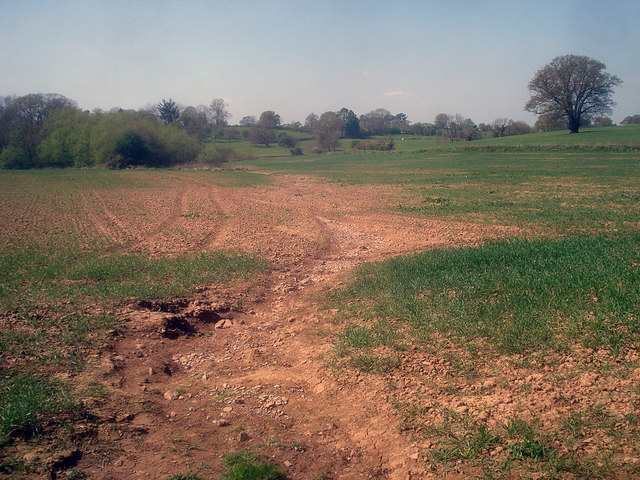 |
| Whoops, there goes a century. |
We shouldn't be surprised that we live in a world of weeds. Never before has the earth seen so much bare dirt. And lawn mowers. I'll admit it's a little depressing to see so many restoration sites dominated by the same crappy plants I see in every ditch and parking lot. But, native or no, the weeds may be better short-term alternative to protect long-term ecological and human assets.
 |
| Mimulus ringens (Monkey flower). C-value = 4, meaning that it is found about equally in disturbed and high-quality sites. This was at a wetland restoration where it was probably planted. |
 |
| Carex aurea (Golden sedge). C-value = 9 in Indiana, though I found this in Wisconsin. Don't expect to find this in a ditch. It is quite short, and I held this one aloft to, um, enhance its grandeur. |
**Plants that are both non-native to a region and invasive by habit are a related, but sometimes distinct, problem. The most problematic ones are perennial. They are customarily assigned a C-value of zero.
***Of course, erosion is a natural process, even in a floodplain. If a flood is "gradual" and high enough, more sediment can be deposited and the process can begin again. Better cultural practices have reduced erosion in recent times, but it is still a problem in many/most areas.

